History of the NCRA/ANREC
First Broadcast
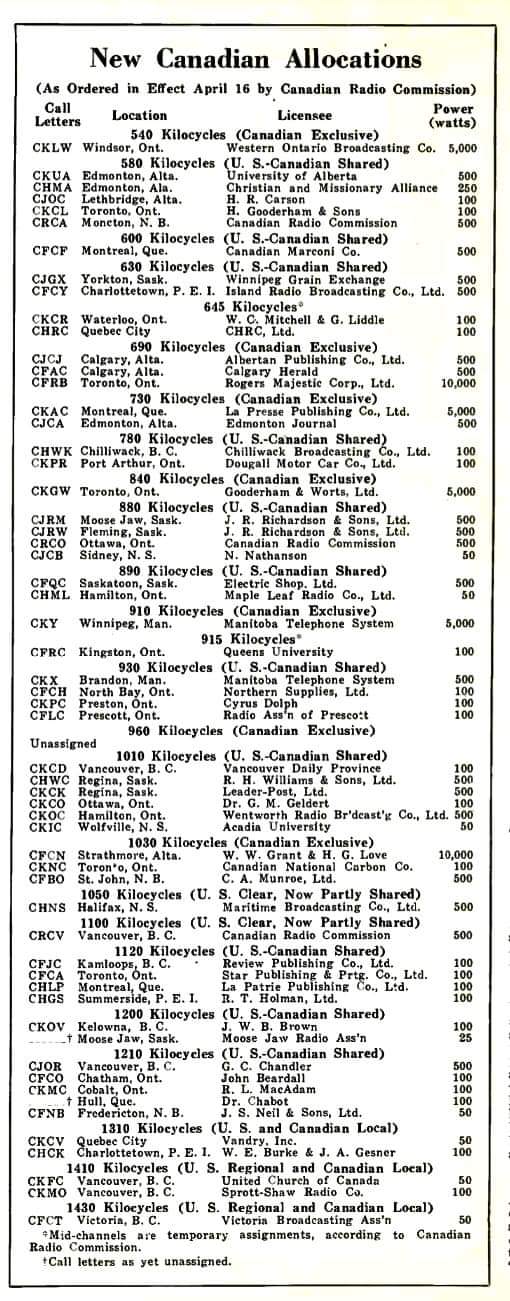
First test broadcast at Queen’s University in Kingston, Ontario.
First Associations
(1960s, 1970s). Community and Campus stations grow and the CRTC recognized their importance.
New associations were formed regionally. Community Stations allowed on the FM band for the first time.
First Conference
In February 1981, the first National Campus Radio Conference (NCRC) was held in Ottawa, Ontario at Carleton University, with 120 representatives from stations from across the country.
NCRA/ANREC Founded
In July 1986 the NCRO was incorporated as the National Campus and Community Radio Association Inc./ L’Association nationale de radios étudiantes et communautaires Inc. (NCRA/ANREC)
Campus and Community Radio Designated!
Campus and Community stations are licensed under the CRTC.
- First Associations
- Seeds of an Organization
- The First Conferences
- NCRA/ANREC has arrived!
- NCRA/ANREC Projects
- Projects (cont_d)
Many stations felt that it would be helpful to organize the stations across the country to exchange information and ideas. In the fall of 1959, stations from across the country met to discuss their problems and exchange ideas. Although this conference proved very useful for the stations attending, there was not enough support at that time to establish a national organization similar to the organization in the United States, the IBS (Intercollegiate Broadcasting System), which had started up several years earlier. Indeed, several new stations started operation as a result of information gained at that meeting. Several Canadian campus stations joined the IBS organization.
In the 1960’s, regional organizations began and stations began meeting on a regional basis. By 1971, three regional organizations existed – The Western Association of University Broadcasters, the Ontario Association of Campus Broadcasters, and the Atlantic Association of University Broadcasters.
The Western Association of University Broadcasters (WAUB) had members from British Columbia, Alberta, and Saskatchewan. At their annual conferences, members discussed topics that still concern stations today – finances, dealing with the CRTC and Carrier-Current broadcasting, and sending newsletters between stations via tape. The peak year for the WAUB was 1969. With six active members, the organization provided a number of benefits for the participating stations. Membership dropped the following year to two, and shortly thereafter, the organization folded.
The Ontario Association of Campus Broadcasters (OACB) was the first of several Ontario based campus radio organizations. Formed in 1971, one of its main aims was to act as a lobby force in dealing with the CRTC. The OACB also intended to set up a central purchasing body with equipment manufacturers for lower rates, explore the possibility of setting up a clearing house for national block advertisers, and provide a mechanism for tape exchanges. One of the first problems the OACB addressed itself to was the question of distribution. At that time there was no established procedure for carrier current applications and several campus stations considered carrier current to be a better (and cheaper) distribution method than closed circuit. The OACB commissioned Professor Janisch, from the Faculty of Law at the University of Western Ontario, to prepare a brief to be submitted to the CRTC on the subject of a special licence for carrier current. Professor Janisch submitted his report to the CRTC in the summer of 1971. The CRTC issued a policy statement on student carrier current on May 4th, 1972. Despite its ambitious aims, the OACB lasted only one year.
The Atlantic Association of University Broadcasters was the oldest surviving campus radio organization in the country. It was set up in 1969 at a conference at Mount Allison University in Sackville, New Brunswick, to promote cooperation among Atlantic university radio stations. The organization sponsored two annual conferences for several years, which was later reduced to one annual conference
In November 1972, during the Canadian Entertainment Conference in Kitchener, Ontario, a gathering took place involving representatives from campus radio stations nationwide to address concerns and ideas regarding campus radio in Canada. One key focus of the meeting was the necessity for information and programming exchange among stations. This led to the establishment of a national campus radio magazine named CCR (Canadian Campus Radio), which was distributed to all campus stations across the country. The magazine featured a directory of campus stations, reports from various stations, tape lists from twelve stations, music industry articles, and discussions on the proposed FM policy by the CRTC. Six issues were circulated before the publication ceased in late 1973.
In the autumn of 1977, delegates from five Ontario campus radio stations convened in Hamilton to explore the creation of a new provincial campus radio organization. By April 1978, the Ontario Campus Radio Organization/l’Organization de Radio Campus d’Ontario (ORCO) was established with eighteen founding members. ORCO concentrated on financing, distribution, and information sharing. The organization aimed to enhance information exchange through bi-monthly business meetings, a monthly newsletter, and an annual major conference.
While the first community radio station in the United States, KPFA in Berkeley, California, commenced operations in 1949, community radio in Canada did not emerge until 1974/1975 with the launch of four stations: CFRO-FM Vancouver, CINQ-FM Montreal, CKCU Ottawa, and CKWR-FM Kitchener. The delayed start in Canada was primarily due to the reliance of community radio stations on listener donations for financial backing.
Community radio in Quebec saw growth in 1975 when the Parti Quebecois Government expanded the Programme d’Aide aux Medias Communautaires (PAMEC) initiated by the previous Liberal government. With increased financial aid and support from the Quebec Ministry of Communications, Quebec now boasts 22 community radio stations, with several more in the planning phase. In 1979, l’Association des Radiodiffuseurs Communitaire du Quebec (ARCQ) was founded with a membership of 22 community stations.
In Northern Canada, Native Community Radio experienced significant expansion following the inception of the Northern Native Broadcast Access Program by the Secretary of State in 1983. Thirteen regional production centers received financial assistance from this initiative, leading to the establishment of over 60 additional community stations in native communities across northern Canada. Despite the growth of community radio in Quebec and the north, along with substantial interest in other parts of Canada, there have been limited new community stations licensed in other regions of the country.
In February 1981, the first National Campus Radio Conference (NCRC) was held in Ottawa, Ontario at Carleton University, with 120 representatives from campus and community radio stations from across the country. The CRTC’s FM Radio Policy of 1975 had recently allowed campus and community radio onto the FM band for the first time, and most in this group were either hopeful or very new broadcasters. At that conference, the National Campus/Community Radio Organization (NCRO) was formed to exchange ideas, share experiences, and work on networks to promote campus radio across Canada. The NCRO published a regular newsletter, organized six more annual conferences, and worked on other projects.
For its first three annual conferences, there was no Board of Directors. The goals of the organization were to provide a national voice, and for that role, a standing working committee was needed, so a board was formed. One of the most important roles of the Board was to represent the needs and views of our sector to Government and other agencies. The CRTC is open to communication with anybody, including all stations, however, as individual stations our opinion was only our own and was not necessarily a reflection of the needs and wants of other stations, even similar stations in comparable markets.
In August 1983, the third annual conference was held at Concordia University in Montreal where the delegates voted to formalize the structure of the NCRO further and to establish an office to carry out a variety of services for member stations. That year the Alternative Radio News Service, a regular mailout of alternative news and information, was started to campus and community stations.
1981 The First Conference
Founding board member Pat Nagle writes:
I originally got the ball rolling by suggesting the idea of a conference. At the time, I was the manager at CHRW. Craig Mackie proposed having it in Ottawa, as CKCU was at that time the “big” station, and so away we went.
The original organizing committee was David Assmann (manager of CKMS-FM at the time), Sandra Berry (a volunteer at CKCU), Craig Mackie (manager at CKCU-FM), Graham Saywell (manager at CKLN) and myself. The conference began on the Friday with remarks from Mackie (“The Future, its problems and potential for Campus radio in the Canadian Broadcasting System”). It featured other things, such as workshops on station management, music programming and copyright, national advertising/sponsoship, program exchange, technical information exchange, community access, recruiting and training volunteers, a discussion of the Toronto Campus FM project (a group I was involved with which planned for a joint FM licence by UofT, Ryerson, York, and some others), and panels with record company people, and a panel with the CRTC, Department of Communications, the CBC and the Canadian Association of Broadcasters. The closing plenary dealt with the weighty question “Is it time for a national organization?” Part of the discussion was about future national conferences, a national newsletter (which I undertook to edit), program exchange, etc.
The upshot was it was agreed, if I remember correctly) to have another national conference the following year, which was originally going to be held in London, Ontario. There were preliminary discussions about a national organization, and I remember some people being chosen to continue with the work. Unfortunately, we were not big on note-taking and I don’t remember who…
1983 NCRC Montreal
Founding board member Pat Nagle writes:
The 1983 conference was moved to Montreal to co-incide with the first World Community Radio Conference, and a number of things were shared (like billets and accomodation). David Assmann and I attended the AMARC planning meetings on behalf of the NCRC (as it was then called). Some folks from Concordia were also involved in the planning (I don’t recall the names). The campus/community radio part was smaller than the previous year, given that we expected many to be involved in the world conference. I don’t recall there being notes around. The newsletter continued, and David and I, along with a range of others, carried what work needed to be done on a fairly adhoc basis, consulting with stations by phone and through the newsletter. (There may actually be some copies of the old newsletter in some stations, or at the Public Archives. I have a few from the first year here.).
At the conference, discussion arose about making the organization more formal and establishing a protocol for moving the conference around from region to region. If I remember correctly, we continued to manage the national organization on a somewhat adhoc basis, from my office at CKCU in Ottawa.
At NCRC ’84 (Vancouver) and NCRC ’85 (Fredericton), plans for incorporation were discussed and bylaws for the organization were drafted. In July 1986 the NCRO was incorporated as the National Campus and Community Radio Association Inc./ L’Association nationale de radios étudiantes et communautaires Inc. (NCRA/ANREC). Since then, the primary work of the association has been done by a volunteer board of directors. In the early 1990’s, there was an NCRA/ANREC national office and executive director for a short period of time, but due to lack of stable funding, among other problems, the office closed after less than one year of operations. In February 2002, the NCRA/ANREC established a new national office in Montreal with a national coordinator. The office moved to Ottawa in May 2005.
Free Radio On My Phone (2016)
In April 2016, the NCRA/ANREC initiated a nationwide awareness campaign to educate Canadian consumers about the current practice of many telecommunications service providers and cell phone manufacturers in Canada blocking access to FM Radio receivers (“FM chips”) already integrated into Android phones. If these FM chips were unblocked, the phones could function as radio receivers by simply connecting a pair of headphones to serve as an antenna. The FM chip operates like a standard FM radio, enabling users to tune in without requiring data plans and enjoying up to three times longer battery life. This setup allows users to access crucial emergency information anytime, regardless of cellular coverage, in urban and rural areas alike. Enabling FM chips could enhance compliance with National Public Alerting System standards. For instance, if the FM chip had been enabled during the Fort McMurray evacuation, more cell phone users would have had better access to critical information without burdening cellular networks or incurring high data-roaming fees from streaming radio. Depending on telecommunication providers to offer discounted or free services during emergencies on a case-by-case basis is not a dependable approach.
Reclaim Your Radio (2011)
On Monday, November 14, 2011, campus and community radio stations nationwide came together to support the “Reclaim your Radio” initiative, marking the 25th anniversary of the National Campus and Community Radio Association (NCRA). This special day-long broadcast also coincided with the launch of an NCRA-led campaign advocating for the reservation of frequencies dedicated to campus and community radio stations, alongside the 11th annual Media Democracy Day.
The celebratory broadcast aired live from 12-8 pm ET on participating stations across Canada, highlighting the importance of community voices in the media landscape.
Why Were We Reclaiming?
The essence of the initiative revolved around the public nature of the airwaves. However, due to limited spectrum availability, some communities aspiring to establish local non-profit stations encountered challenges finding space for their voices. Over the upcoming year, efforts focused on urging the government and individual Members of Parliament to allocate at least one frequency for campus and community radio stations in every Canadian community.
The Case of CKLN 88.1 FM
On January 28, 2011, the Canadian Radio-Television and Telecommunications Commission (CRTC) made the decision to revoke the license of CKLN 88.1 FM in Toronto. This community-based campus radio station, operating from Ryerson University since 1983, had faced issues with regulatory compliance. Despite this, CKLN boasted a rich history of community engagement and exceptional programming.
With CKLN ceasing its broadcasts, the frequency remained the sole available slot in the greater Toronto area. While other campus and community stations existed in the city, none were specifically rooted in or catered to the downtown core. The CRTC subsequently issued a public call for applications from potential licensees interested in utilizing this frequency.
Rendez-vous de la Francophonie
In 2015, nine NCRA member stations from various regions in Canada collaborated to produce 17 daily two-minute audio capsules documenting local Francophone culture, showcasing Rendez-vous de la Francophonie events, and emphasizing the significance of bilingualism.
The following year, in 2016, 29 NCRA member stations actively participated in creating 30 minutes of content spanning from the 11th of January to the end of March.
Building on the accomplishments of the previous years, the goal for RVF 2016-2017 was to engage up to 50 member stations nationwide in producing 28 minutes of audio programming. These stations were expected to broadcast weekly documentaries featuring participants and their unique narratives throughout 52 weeks from October 2016 to October 2017. The celebrations in 2017 also commemorated the 150th anniversary of Canada Day. A total of 72 documentaries were crafted during the 2016-2017 period.
In 2018 and 2019, the NCRA/ANREC organized a special day of programming on March 20th. Twenty stations dedicated airtime to broadcast 20 documentaries as part of the festivities, honoring the 20th anniversary of Rendez-vous de la Francophonie and celebrating bilingualism in Canada (2019).